.png)


Can Foam Be Recycled? A Guide to Foam Recycling and Processing

Updated: Sep 8
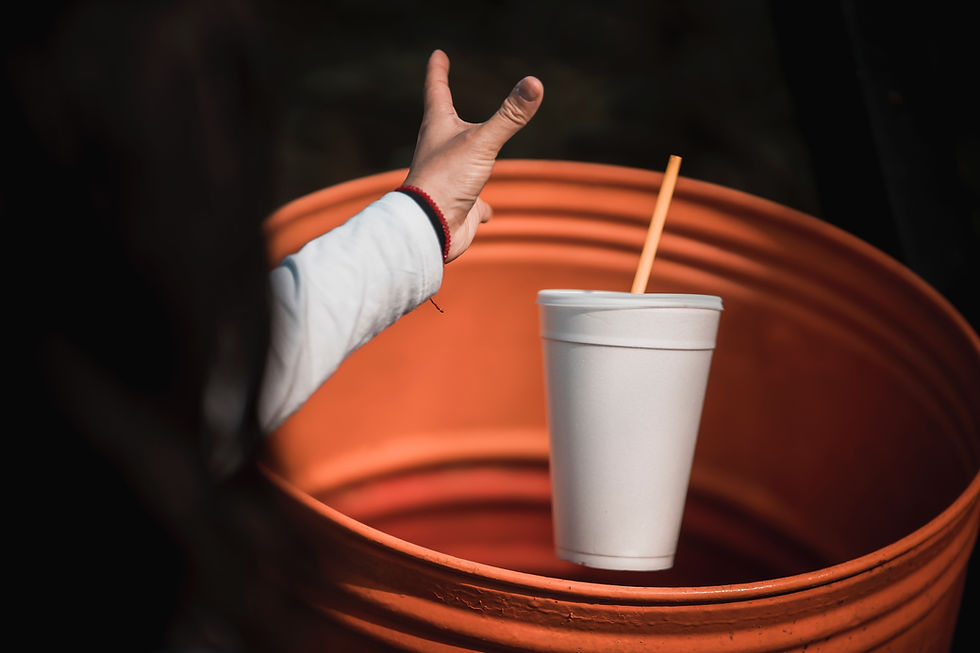
Foam can be recycled in some cases, but it’s more complicated than recycling materials like cardboard or metal. Certain types of foam—especially expanded polystyrene (EPS) used in protective packaging—can be recycled when they’re clean and sent to specialized facilities. However, foam is rarely accepted in curbside recycling programs because it’s easily contaminated, bulky to transport, and requires specialized processing.
In this article, we’ll walk through which foams are recyclable, why many are not, how foam moves through recycling systems, and how baling and bale ties help facilities handle recyclable materials efficiently.
Can Foam Be Recycled? What Recycling Facilities Want You to Know
Foam is everywhere in modern packaging—from appliance boxes and electronics cushioning to takeout containers and disposable cups. With growing interest in sustainability, many businesses and consumers are asking: Can foam actually be recycled, or does it have to go straight to the landfill?
The short answer is that some foam can be recycled under the right conditions, but it usually requires specialized collection and processing. That’s why you’ll often see foam excluded from standard curbside recycling lists, even in communities with robust recycling programs. Understanding what types of foam are recyclable, where they can go, and how they’re processed can help organizations make better decisions about packaging, waste management, and recycling system design.
Can Foam Be Recycled?
In principle, yes—certain types of foam can be recycled. Expanded polystyrene (EPS), the rigid white foam commonly used to protect electronics, appliances, and other fragile items, is the best-known example. When EPS is clean and sorted, it can be processed and turned back into usable plastic material.
However, the reality is more complex. Foam is extremely lightweight and bulky, which makes it expensive to transport in its original form. It’s also easily contaminated by food, oils, labels, and debris. Because of these challenges, foam is typically only recycled through special drop-off locations, mail-back programs, or dedicated commercial collection systems, not through curbside recycling carts.
In many cases, foam that is successfully recycled has been:
Kept clean and dry from the start
Sorted by type, separate from other plastics
Densified or compacted using specialized equipment before shipment
Without these steps, foam is difficult and costly to process, which is why access to foam recycling varies widely from one region to another.
What Types of Foam Can Be Recycled?
Some foam materials can be recycled when handled correctly and sent to facilities equipped to process them. Common examples include:
Expanded polystyrene (EPS) packaging foam
The rigid, often white foam blocks or forms used to cushion electronics, appliances, and other fragile products. When clean and free of tape, labels, and contaminants, EPS is one of the most commonly recycled foam materials through specialized programs.
Protective foam packaging from electronics or appliances
Custom-shaped foam inserts that hold TVs, computers, small appliances, and similar items in place. These are often EPS and may be accepted at foam drop-off locations or by certain commercial recyclers.
Some food-grade foam containers (program dependent)
In a small number of areas, clean foam cups, clamshells, and trays (often made from polystyrene foam) may be accepted through specific recycling programs or drop-off sites. Most programs, however, do not accept food-service foam due to contamination risks.
Because infrastructure and processing options vary, it’s essential to check local or regional guidelines. What’s recyclable in one city may not be accepted in another.
What Foam Cannot Be Recycled?
Many foam products are either not recyclable at all or not accepted in most programs due to contamination or material makeup. Examples often include:
Food-contaminated foam containers
Takeout clamshells, meat trays, and foam cups contaminated with grease, sauces, or residues are usually not accepted. Even if the base material is technically recyclable, contamination makes it difficult to process.
Packing peanuts
Traditional foam packing peanuts are rarely accepted in recycling streams. They are lightweight, messy, and can contaminate other materials. They’re often reused instead, or replaced with starch-based, compostable alternatives.
Construction insulation foam
Rigid foam boards or spray foam used for building insulation may be made from different formulations and often include adhesives, facings, or mixed materials. These complexities make them challenging to recycle through standard channels.
Laminated or mixed-material foam products
Foam that’s bonded to films, fabrics, cardboard, or other plastics (such as some display boards, specialty packaging, or promotional products) is usually not recyclable because the layers are difficult to separate.
When foam is heavily contaminated, combined with other materials, or made from less common formulations, it’s more likely to be directed to disposal rather than recycling.
Can Foam Be Placed in a Recycling Bin?
In most communities, foam should not be placed in your regular curbside recycling cart. Even where plastics are widely accepted, foam is typically excluded. There are several reasons for this:
Contamination risk: Foam used for food or shipping can be easily contaminated with oils, residues, and debris, disrupting recycling processes.
Transportation inefficiency: Foam takes up a large amount of space but contains very little actual material by weight. Hauling loose foam is often not cost-effective for recycling operators.
Limited processing infrastructure: Only a relatively small number of facilities are equipped with the specialized equipment needed to densify and process foam profitably.
Instead of placing foam in your curbside bin, you may be directed to:
Dedicated foam drop-off sites
Mail-back programs offered by some manufacturers or recyclers
Reuse options, especially for clean packing peanuts or protective packaging
Always follow local recycling rules—placing foam in your curbside bin when it’s not accepted can increase sorting costs and contaminate other recyclable materials.
Why Foam Is Difficult to Recycle
Foam presents several significant challenges that make it harder to recycle than many other packaging materials:
Low material density: Foam is mostly air. A large volume of foam often contains relatively little plastic by weight, driving up storage and transportation costs.
Contamination: Food residues, dust, labels, and mixed materials can be hard to remove and often render foam non-recyclable.
Transportation costs: Moving bulky, lightweight foam to specialized facilities is expensive compared to denser recyclables like metals, cardboard, or rigid plastics.
Limited recycling programs: Because of the costs and specialized equipment required, relatively few recyclers handle foam at scale. Access tends to be better in dense population centers or regions with specific collection initiatives.
These factors combine to make foam a challenging material in the push toward more circular and sustainable packaging systems.
How Foam Recycling Works
Where foam recycling is available, it typically follows a more specialized process than standard curbside recyclables. A high-level overview looks like this:
Collection and sorting
Foam is collected through drop-off programs, commercial pickups, or special events and is sorted by type, primarily focusing on clean, uncontaminated expanded polystyrene (EPS).
Cleaning and preparation
Tape, labels, and non-foam materials are removed. Only foam that meets specific quality standards moves on to the next stage.
Densifying or compacting foam
Loose foam is fed into densifiers or compactors, which crush and heat the material to remove air and form dense blocks or ingots. This step dramatically increases material density, making storage and transport far more economical.
Processing into pellets or raw material
The densified foam is shredded, melted, and formed into plastic pellets or other raw forms used by manufacturers. These pellets can then be incorporated into new plastic products.
Without densification, transporting and processing foam at scale is rarely practical, which is why specialized equipment and handling practices are critical for successful foam recycling operations.
What Products Are Made From Recycled Foam?
When foam—especially EPS—is successfully recovered and processed, it can be turned into a variety of new plastic products, such as:
Picture frames and decorative molding
Recycled polystyrene can be used to create frames, trim, and other molded items.
Insulation materials
Certain insulation products and building materials can contain recycled polystyrene.
Molded plastic products
Items such as hangers, office supplies, and durable plastic components may contain recycled foam-based plastics.
Packaging materials
Some packaging, protective corners, or rigid inserts can be made with recycled polystyrene pellets.
These end uses help keep plastic material in circulation, but they depend on a consistent supply of clean, densified foam from economically viable recycling programs.
How Foam Is Prepared for Recycling Facilities
Because foam is so bulky and lightweight, preparation steps focus heavily on reducing its volume before transport. Common approaches include:
On-site densification: Facilities that generate large volumes of foam—such as distribution centers or manufacturers—may install foam densifiers. These machines compress and sometimes heat foam into dense blocks or logs that are much easier to store and ship.
Compaction into manageable units: Smaller operations or consolidation points might use compactors or balers to reduce volume and organize foam or mixed materials for transport.
Whether foam is handled alone or alongside other recyclables, compressing it into stable, manageable units is essential for cost-effective storage, handling, and shipment to downstream processors.
How Bale Ties Help Secure Recyclable Materials
Across the recycling industry, facilities routinely compress materials—such as cardboard, mixed paper, plastics, and sometimes densified materials—into bales to optimize space and improve handling. Once compressed, these bales must be kept under consistent pressure to prevent them from expanding, shifting, or falling apart.
Bale ties and baling wire are critical in this process. They:
Secure compressed materials so bales maintain their shape and density.
Improve safety by reducing loose, shifting material in warehouses and trailers.
Support efficient transport and storage, allowing recyclers to stack bales, load trucks consistently, and meet bale specifications from mills and downstream processors.
Even when foam is densified into blocks rather than traditional bales, other recyclable materials at the same facility—such as cardboard, paper, and rigid plastics—are often baled and secured with reliable bale-tie solutions.
Choosing the Right Bale Ties for Recycling Operations
Recycling centers and industrial generators handle a wide variety of materials, each with different densities, bale sizes, and handling requirements. Choosing the right bale ties or baling wire is essential for safe and efficient operations. Selection typically depends on:
Material types include cardboard, mixed paper, rigid plastics, light materials, and heavier, high-density bales, each of which places different demands on wire strength and gauge.
Baler equipment: Vertical balers, horizontal balers, and two-ram balers often use different tying systems and wire configurations.
Bale density and size: Heavier, more compact bales require stronger wire and may need specific finishes or coatings for performance and corrosion resistance.
Handling and shipping needs: Facilities that stack bales multiple levels high or ship long distances need ties that maintain tension and integrity under stress.
Eastern Wire Products supplies a full range of bale ties and baling wire solutions—such as single-loop ties, double-loop ties, and automatic baler wire—engineered to match the demands of modern recycling operations.
Foam Recycling and the Role of Efficient Material Handling
Foam can be recycled in some circumstances, particularly when it’s clean, sorted, and processed through specialized facilities with densification equipment. However, foam’s low density, contamination risks, transportation costs, and limited processing infrastructure mean it’s rarely accepted in curbside programs.
For organizations handling substantial volumes of foam and other recyclables, the key to efficient operations lies in smart material preparation and secure handling—from densification and baling to storage and shipment. Reliable bale ties and baling wire help keep compressed materials stable, safe, and ready for downstream processing, supporting the overall efficiency of recycling systems.
If your operation manages high volumes of recyclable materials and relies on balers or densifiers, Eastern Wire Products can help you choose the right bale ties or baling wire to keep your material moving smoothly. Contact our team today to discuss your baler type, materials, and performance needs, or request a quote to see how we can support your recycling operation.
FAQs About Recycling Foam
Can foam be recycled?
Yes, certain types of foam—especially clean expanded polystyrene (EPS) packaging—can be recycled through specialized programs or facilities. However, foam is rarely accepted in curbside recycling and usually must go through dedicated drop-off, mail-back, or commercial collection systems.
Can I put foam in my recycling bin?
In most communities, no. Foam is typically not accepted in curbside recycling carts because it’s easily contaminated, bulky to transport, and requires specialized processing. Check your local recycling guidelines; if foam is not listed as accepted, it should not go in your bin.
What types of foam are recyclable?
Clean, rigid EPS foam packaging for electronics, appliances, and some product packaging is the most commonly recyclable type. In a few areas, clean food-service foam containers may also be accepted at drop-off sites. Always confirm with local or regional recycling programs before setting foam aside for recycling.
Why is foam difficult to recycle?
Foam is difficult to recycle because it’s very lightweight and bulky, making transportation costly. It’s also prone to contamination, and only a limited number of facilities have the equipment needed to densify and process it efficiently. These challenges mean foam recycling is far less common than recycling materials like cardboard, metals, and many rigid plastics.


Comments